A buyer wires her deposit on a two-bedroom in a Paulus Hook tower this summer. The listing quoted a monthly tax figure low enough to make the mortgage math work. What the offering sheet didn't spell out: that number is a PILOT payment, not a tax bill, the agreement has years left on the clock, and the nearly identical tower next door, whose PILOT expired last spring, is now paying close to double for the same square footage.
That gap, not the headline tax rate, is what actually prices a Jersey City condo in 2026. And two things the city did this year just made the gap wider.
The Number on the Listing Isn't the Number You're Buying
Jersey City's standard property tax rate sits at 1.67%, genuinely lower than Newark's 2.8%, Montclair's 3.2%, or Maplewood's 3.4%. That comparison gets repeated often enough that it's become a kind of shorthand for the whole city. It's also close to useless for a Downtown or Paulus Hook buyer, because most towers in those submarkets don't pay the standard rate at all. They pay a PILOT, a Payment In Lieu Of Taxes, negotiated under New Jersey's Long-Term Tax Exemption Law and running anywhere from ten to thirty years.
Under state law, 95% of PILOT revenue goes to the municipality and 5% to the county. The Board of Education gets nothing directly from a PILOT while it's active. That detail matters more than it sounds like it should, because when the agreement expires, the parcel rolls onto the conventional tax roll and the school portion of the bill shows up in full for the first time. Owners who budgeted around the PILOT figure for years suddenly meet a line item they'd never actually paid.
A separate, shorter instrument, the five-year tax exemption, works differently and is the one most individual condo owners and small renovation projects actually carry. It phases in gradually rather than snapping on at once, but it still ends, and the current stock of five-year exemptions in Jersey City represents roughly $9.6 million in forgone tax revenue every year, with condo owners as the primary beneficiaries. The distortion is largest right where one of these is close to expiring: buyers see a listing price built on this year's low payment and price the unit as if that payment were permanent.
Two Moves in 2026 Made the Gap Wider
On January 21, 2026, newly elected Mayor James Solomon signed an executive order launching a full audit of every long-term tax exemption active in the city, more than 100 agreements in total. The stated reason was straightforward: the city had never systematically checked whether these deals were being followed, and had no assurance it was collecting what it was owed. Buildings flagged in that audit could see their agreements enforced, amended, or terminated outright, which is a live variable now sitting on top of every abated unit's timeline, not a settled one.
Then, on July 10, 2026, Solomon introduced a municipal budget proposing a 15.5% increase to the city's property tax rate, aimed at closing a roughly $255 million structural deficit the administration says it inherited. For the average residential property, that works out to about $51 more a month on the city portion and another $63 a month on the school portion, set independently by the Board of Education. Taken together, the administration's own estimate has the average residential tax bill climbing from $11,670 in 2025 to $13,360 by the end of 2026.
That increase hits conventionally taxed properties right away. For an abated unit, it hits the moment the PILOT sunsets, whenever that turns out to be. The cliff every abated condo eventually walks off didn't just get closer this year. It got taller.
What the Same Skyline Is Actually Pricing
Two towers on the same block can carry entirely different cost profiles depending on where each one sits on its own clock, and the city's own submarkets show how much that spread can move.
| Location | Typical Tax Structure | What Actually Sets the Carrying Cost |
|---|---|---|
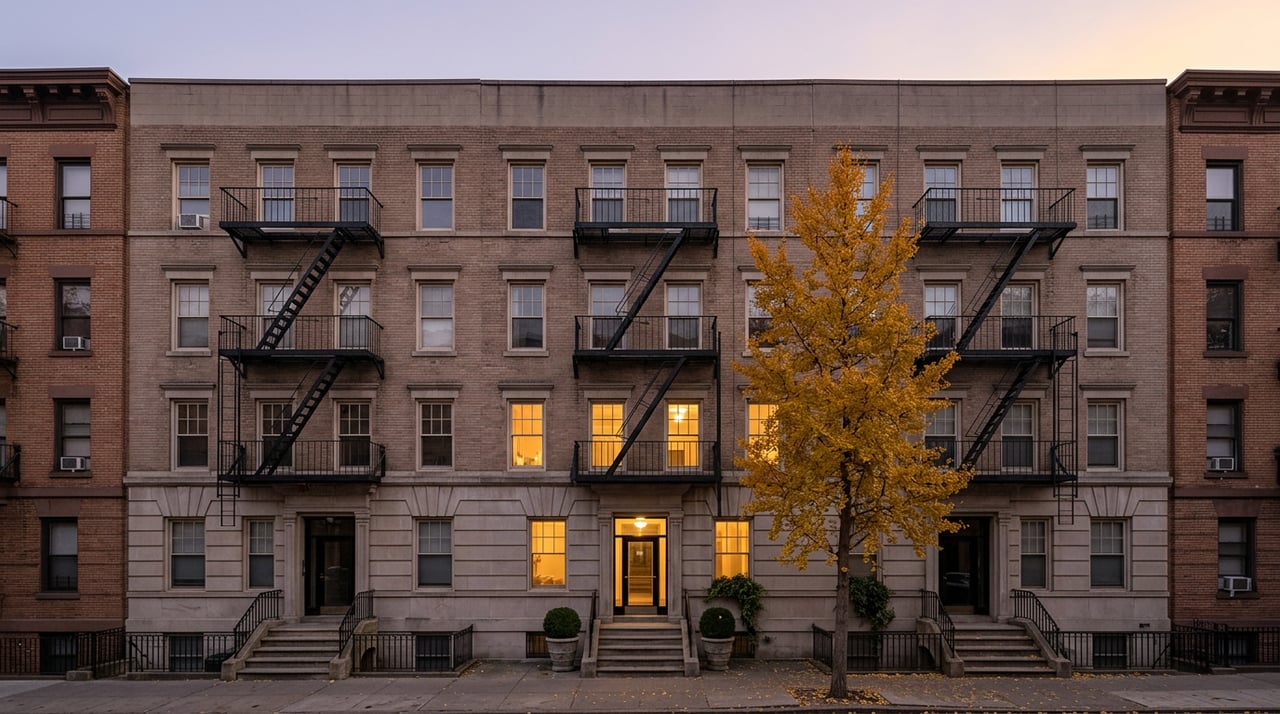
| Paulus Hook & Exchange Place towers (77 Hudson, for example) | Long-term PILOT | Years remaining on the agreement, discounted against the eventual full bill |
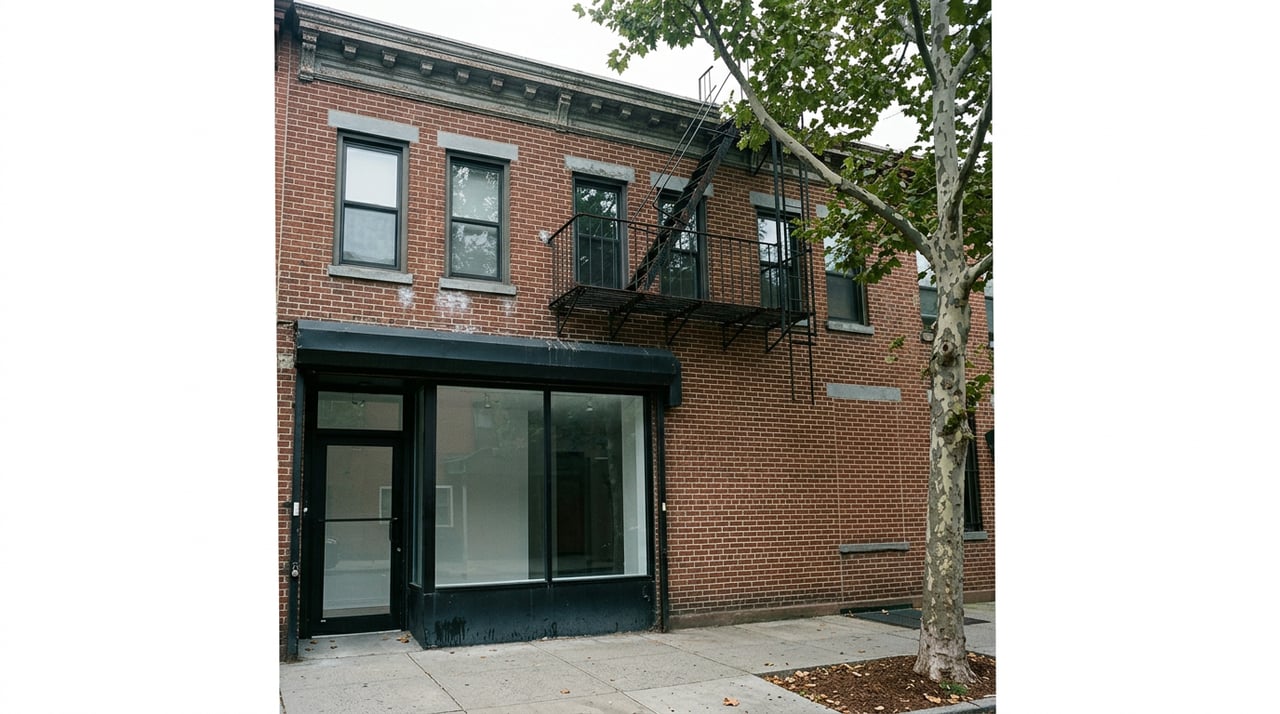
| Paulus Hook brownstones and rowhouses | Full conventional rate (1.67%) | Rises only with citywide reassessment, no cliff |
| The Heights, two- to four-family homes | Full conventional rate (1.67%) | Same predictability as above |
| Journal Square (Journal Squared towers) | 30-year PILOT negotiated between the city and Kushner Real Estate Group | Same mechanism as Downtown, just a longer runway before the cliff |
77 Hudson, the glass tower at Exchange Place with roughly 420 homes, has its abatement scheduled to end around 2029. A buyer closing today on a unit there is buying a three-year runway before that building's tax bill resets to conventional. A buyer closing on the brownstone two blocks away, in the same neighborhood, on the same waterfront walkway, is buying a bill that never resets, because it was never abated to begin with.
Journal Square tells a similar story at a different price point. Recent closed sales in that submarket clustered around a $501,000 median, roughly half of the median running in Grove Street and Exchange Place, the fastest PATH-connected pocket of Downtown. Part of that gap is simply distance from the PATH's fastest ride to the World Trade Center. Part of it is that Journal Square is still absorbing new construction, priced below the finished product, on abatements of its own with decades left to run.
None of this means an abated unit is a bad buy. It means the sale price of an abated Jersey City condo isn't really set by this year's payment. It's set by the distance between that payment and the fully taxed bill the unit will eventually owe, discounted for the years left before it arrives. Two units in the same building, one with twelve years left on its PILOT and one with three, are not the same product, even if this month's tax line looks identical on both listings.
Why a Heights Two-Family Might Be the More Predictable Bet
For an investor comparing a Downtown condo against a Heights multifamily, the standard advice leans hard on cap rate and rent roll. Worth adding to that math: the Heights property, taxed conventionally at 1.67% from day one, has no cliff waiting in its future. Its tax line moves only with a citywide reassessment, the same slow mechanism every conventional property in the state answers to. A Downtown condo with an artificially low current bill carries a known expiration date on that advantage, and after this year's audit and budget moves, a less certain one than it looked twelve months ago.
That doesn't make the abated tower the wrong purchase. It makes the abated tower a different kind of asset than its tax bill suggests today, one where the return depends partly on how many years of low carrying cost are actually left to bank.
Before You Write the Offer
A short list worth working through with your attorney before you're deep into attorney review on any abated Jersey City unit:
- Request the recorded financial agreement itself, not a summary. Confirm the start date, the term, and the escalator schedule.
- Ask what the unit would owe at the current fully taxed rate, using this year's numbers, not a projection built on last year's rate.
- Confirm whether the building appears on the list flagged under the January 2026 executive order. An agreement under audit carries a different risk profile than one that isn't.
- Ask your lender how it's underwriting the tax line. Some lenders use the current PILOT payment. Others use the projected post-expiration figure, which changes your debt-to-income ratio and can move a pre-approval.
- If the building is a small-scale conversion, verify the condominium was legally created and that the abatement wasn't carved to only a subset of units, leaving others exposed differently.
- Ask whether the condo board or HOA carries any liability tied to the building's compliance status. Some long-term PILOTs sit at the sponsor entity level, but that exposure can filter down through common charges in certain structures.
Sellers who put all of this in front of a buyer up front tend to hold their price through negotiation. Sellers who leave it for the buyer's attorney to find tend to give ground in the final week.
Frequently Asked Questions
What's the real difference between a five-year tax exemption and a long-term PILOT? A five-year exemption phases in taxes gradually on a shorter timeline and is the instrument most individual condo owners actually carry. A long-term PILOT is a separate, much longer agreement, typically ten to thirty years, more common on larger new-construction developments. Both eventually expire. They just expire on very different schedules.
Does the city's 15.5% tax increase apply to units that are still on a PILOT? Not immediately. The increase applies right away to conventionally taxed properties. For a unit on an active PILOT, the higher rate becomes relevant the moment that agreement sunsets, which is exactly why the timing of expiration matters more this year than it did before the budget was introduced.
How do I find out how many years are left on a specific building's PILOT? Ask the seller or listing agent for the recorded financial agreement, which will state the start date and term. New Jersey also maintains public PILOT records showing agreement dates, billing amounts, and what a property would owe under conventional taxation, which your attorney can use to verify what's on the listing sheet.
Every one of these questions has a different answer depending on the specific building, the specific unit, and the specific year that unit's agreement was signed. That's exactly the kind of detail a market update can't resolve for you and a conversation can.
If you're weighing a Jersey City purchase, whether it's a Downtown tower on a ticking PILOT clock or a Heights multifamily built to hold its value the plain way, Lena Simpson can walk through the specific numbers on a specific address. Request a Personalized Consultation to start.