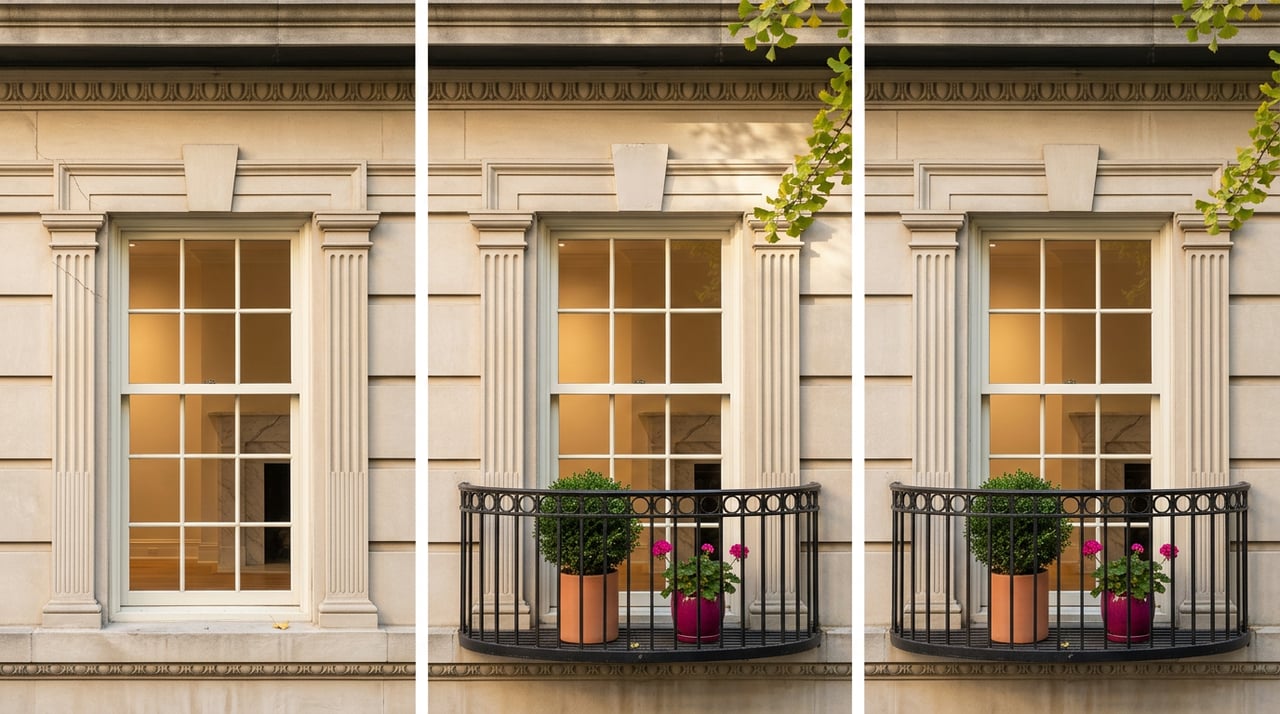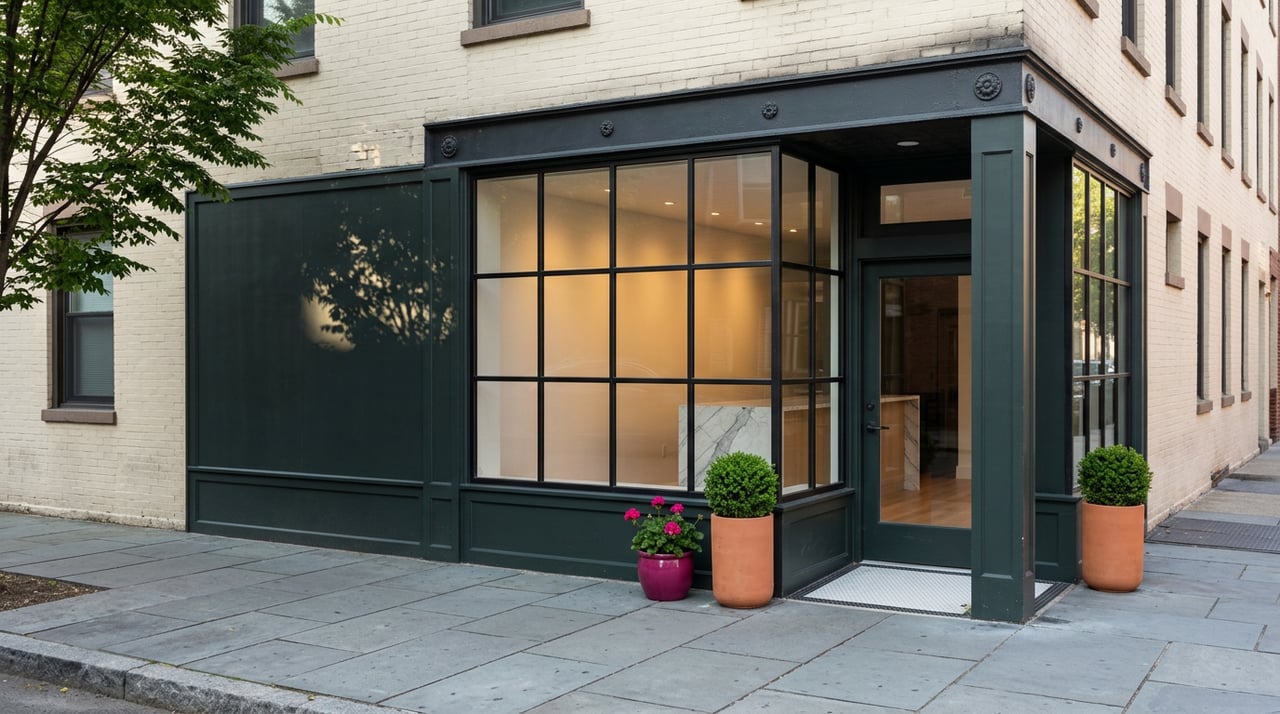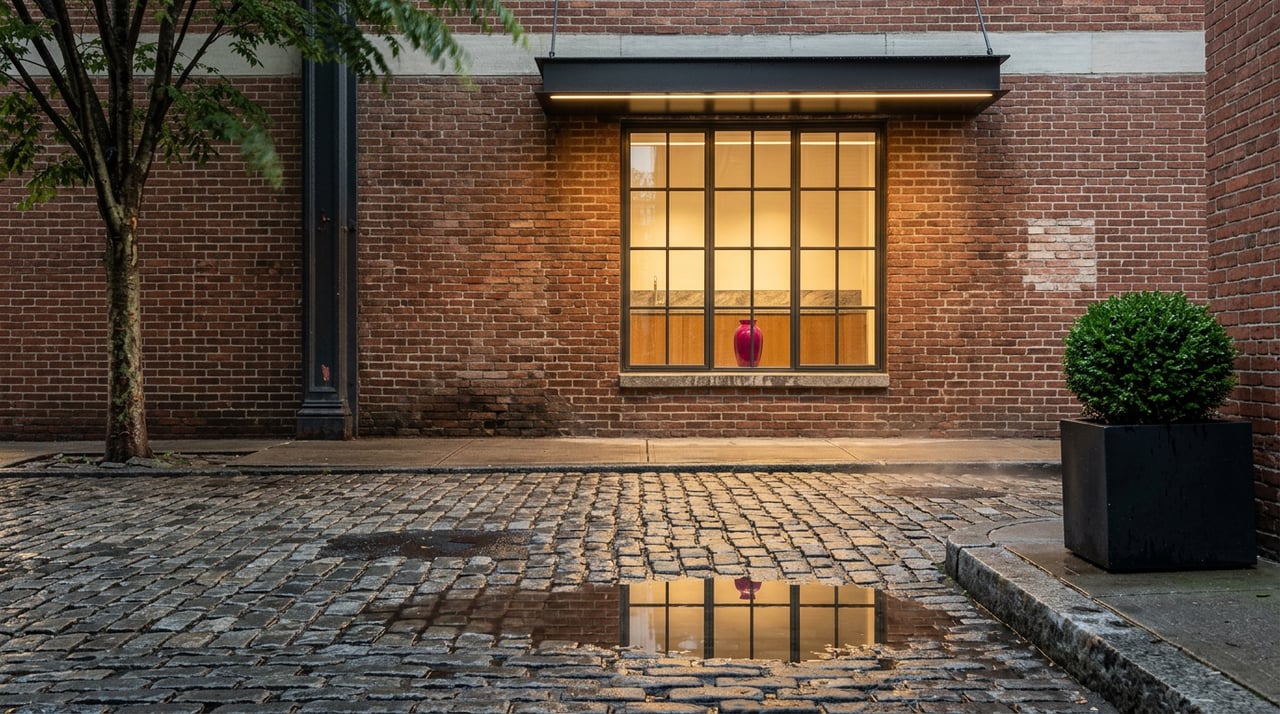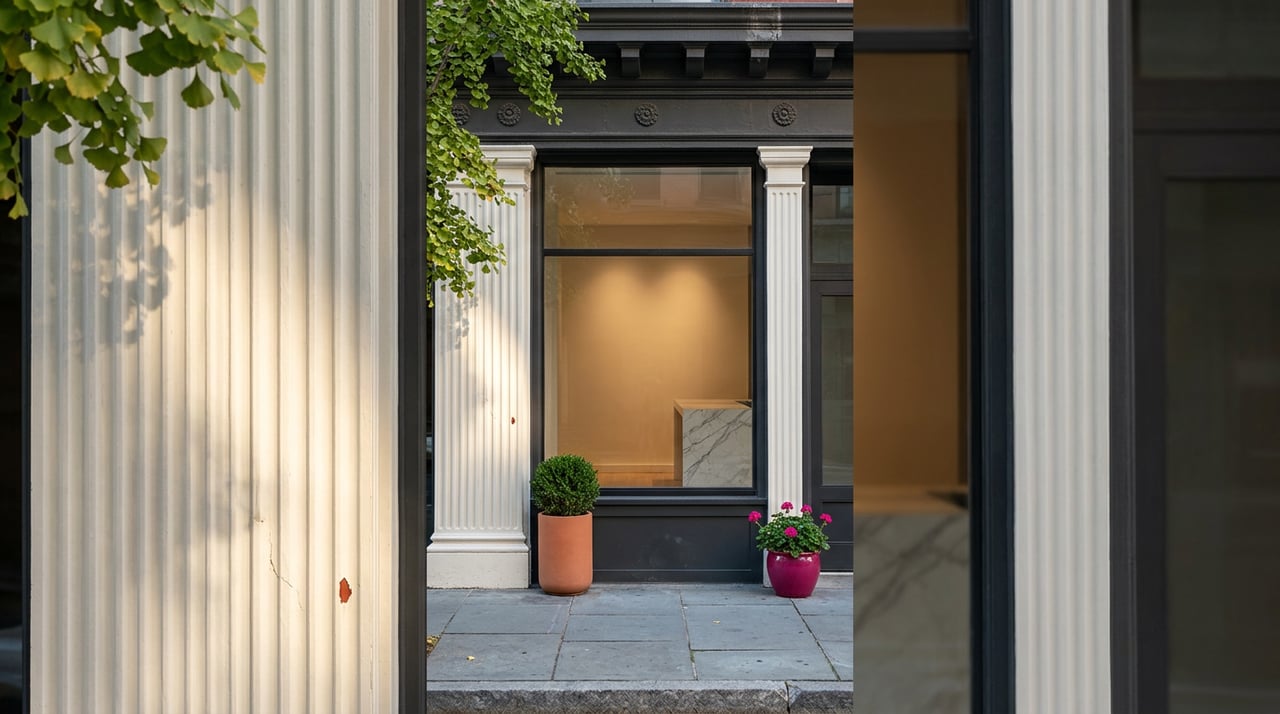
Walk Prince between West Broadway and Sullivan this September and the block reads differently than it did in June. The vacancies you noticed in spring have filled in fast, and the names on the doors are not new brands trying SoHo for the first time. They are groups that already have one address in the neighborhood and are opening a second within a five-minute walk.
That is the shape of this fall in SoHo. Not a diffuse restaurant boom. A compression, mostly on Greene, Prince, and the short stretch of side streets between Spring and Broome, where two or three operator groups now control multiple adjacent storefronts and a returning gallery is tripling its footprint inside cast-iron buildings that once anchored the neighborhood's art era.
The Two-Door Move
The clearest signal is the Corner Store team. The Corner Store materialized in SoHo in 2024 and quickly became a painful reservation, nearby follow-up The Eighty Six took off just as quickly, and the group's next project is also SoHo, just across the street from The Corner Store in the old Principe space. That is three doors from one team inside a two-block radius, with a fourth restaurant, Or'esh, already earning the kind of write-ups that usually take a full year to accumulate. Or'esh is a modern Mediterranean spot where live fire and coal grilling are the focus, the fire-grilled seafood and meats are the standouts, and the design is described as cinematic without feeling formal or overdone.
The King team on Sixth Avenue is running the same play. A few years ago there were no British seafood spots in NYC; soon there will be two within a five-minute walk of each other. The first, Dame, opened in 2021, and the second, Dean's, is arriving shortly from the King team, next door to its sister restaurant in SoHo, offering Guinness, cocktails, and coastal British food including fish pie, roasted Scottish langoustines, and potted shrimp on hot buttered crumpets. Dean's next to King next to Jupiter is a three-restaurant micro-block from one ownership group.
Add Thomas Straker to the count. The buzzy Notting Hill restaurant from Instagram-famous chef Thomas Straker is taking over the SoHo space previously home to Lucky Strike, and a recent meal at the original involved a flatbread topped with juicy mussels, agnolotti bursting with ricotta, and ample people watching.
If you already live between Sullivan and Mercer, the practical result is that your reservation calendar is now dominated by fewer, larger operators. That is worth naming out loud, because it changes how you plan a Thursday.
Where The Rest Of The Openings Actually Landed
The other names to know are spread across the neighborhood, but they cluster on three streets more than the coverage suggests.
- Selene, on the three-story model with a retractable roof on the top floor, homemade pita, and a few people from Scarpetta involved. Group dinners, big tables, dips-forward menu.
- Maayan's, the wine bar with a single pricing rule. The SoHo wine bar exclusively serves bottles with no by-the-glass pours, each one costs $60, and the room leans into cheese and charcuterie. Useful for a two-person, one-decision night.
- Sushi Counter, the Australian sushi roll chain now on its sixth NYC location in SoHo, with rolls that are gluten free across raw, cooked, and veggie. Counter service, not a destination meal, but it fills the gap between Balthazar Bakery breakfast and a real dinner.
- Crazy Pizza, which the neighborhood tourism office describes with unusual candor. Crazy Pizza New York City fits into its SoHo setting with a theatrical spirit and distinctive style, blending local culture with Italian roots. Read that as loud and Italian-family-friendly on a weekend night.
Fanelli's is still Fanelli's. When the polished SoHo dinner plan sounds exhausting, Fanelli makes more sense: straightforward, a little worn in, better for that, a burger and a beer and a no-fuss reset between shopping, drinks, or errands. The point of listing it here is that the block around 94 Prince has not changed, even as the block around 226 Lafayette (Jack's Wife Freda) and the block around Sullivan and Prince have all shifted.
Greene Street Is Reclaiming A Piece Of Its Old Job
The single most interesting non-restaurant story of the fall is Garth Greenan's move from Chelsea into SoHo. Garth Greenan Gallery is relocating and expanding to two new spaces at 10 Greene Street and 25 Greene Street this fall, with its new SoHo home opening in early September 2026 and major solo exhibitions by Rosalyn Drexler and Cannupa Hanska Luger.
The scale matters. The spaces sit in landmarked cast-iron facade buildings, include more than 4,000 square feet of naturally lit, street-level exhibition space plus expanded viewing rooms and on-site storage, and the relocation triples the gallery's physical footprint. Positioned directly across the street from each other, the two doors are meant to run in dialogue rather than as flagship-plus-annex.
Why this is worth flagging for anyone who already lives here: SoHo has spent two decades being described as a former gallery district that traded art for retail. The exceptions have been small. Many art galleries are not in SoHo anymore, most of them have migrated to Chelsea by now. A 4,000-square-foot cast-iron space opening on Greene, from a gallery that intentionally re-presents postwar American art of the 1960s through the 1980s, is not a nostalgia move. It is a bet that the block can support the traffic. That bet is legible in the rent conversation happening on the other side of Broadway.
The Broadway Signal
The retail read on SoHo has quietly turned. Retail occupancy in SoHo is now 84 percent, higher than before the pandemic, and the executive director of the SoHo Broadway Initiative describes an international hunger and curiosity about the neighborhood. The store leases that closed the vacancy gap are a specific kind of tenant. SoHo is being transformed by newcomers grabbing storefronts, including Orior, a furniture maker from Northern Ireland; Galia Lahav, a haute couture and bridal fashion brand from Israel; TOTEME, a Swedish apparel company; and Thuma, a San Francisco mattress company, establishing New York beachheads. TOTEME is opening a 7,700-square-foot retail space at 49 Mercer Street.
For a resident, the practical read of that data is this: Broadway and Mercer are increasingly first-New-York-address showrooms for international brands, and the operator-driven food and gallery activity is compressing onto the smaller side streets one block off. That is not a value judgment. It is a walking pattern. If you want the neighborhood as-a-neighborhood, you are on Greene, Wooster, Prince west of Broadway, and Sullivan. If you want retail-as-spectacle, that stays on Broadway.
A Resident's Fall Calendar Worth Marking
Working from the openings above, here is what the next eight to ten weeks actually contain if you live here.
Early September: Garth Greenan opens on Greene Street. If you want to see the space before it fills, the first two weeks after opening are the window. The Drexler and Hanska Luger shows will draw meaningful weekend traffic once the art press catches up.
Ongoing: Dean's takes reservations differently than most of the block. Dean's releases reservations two weeks in advance at 9 a.m., early and late tables aren't too hard to find, prime-time reservations sometimes become available day-of, and all eight bar seats and most of the tables are saved for walk-ins. That is a useful rule to internalize if you want to eat there without treating it like a project.
Weekend planning: Selene's retractable roof is a September and early-October asset, not a November one. If you have visitors coming for World Cup weekends or fall gallery openings, that is the room to book.
Weeknight resets: Or'esh, Maayan's, and Fanelli's cover three different moods within four blocks of each other. That is closer to what SoHo used to feel like before the reservation apps made every dinner a scheduled event.
What This Actually Means If You Already Own Here
Two things, both quiet.
First, the operator concentration is a signal about which blocks are gaining foot traffic and which are holding steady. Blocks where one team runs three doors tend to see their sidewalks re-energize on weekday evenings, not just weekends. Prince between Sullivan and West Broadway, the Sixth Avenue stretch around King, and Greene between Grand and Canal are the three to watch.
Second, the return of a serious gallery to cast-iron Greene changes the argument about what SoHo is for. For a decade the neighborhood's identity has been carried by fashion tenants on Broadway and by architecture that hinted at a past the ground floors no longer honored. A 4,000-square-foot exhibition space in a landmarked building, opening in September and programmed through 2027, is the kind of anchor that pulls a certain kind of resident interest back to the streets where the buildings actually mean something.
If you live in SoHo and are thinking longer term about what your address is becoming rather than what it was, this fall is a better data point than any median price. The blocks are re-sorting themselves in front of you.
When you want a discreet, senior-level conversation about how these block-by-block shifts translate into value on your specific address, Lena Simpson offers a private consultation grounded in twenty years of SoHo and downtown market work. Request a personalized consultation to start that conversation on your timeline.