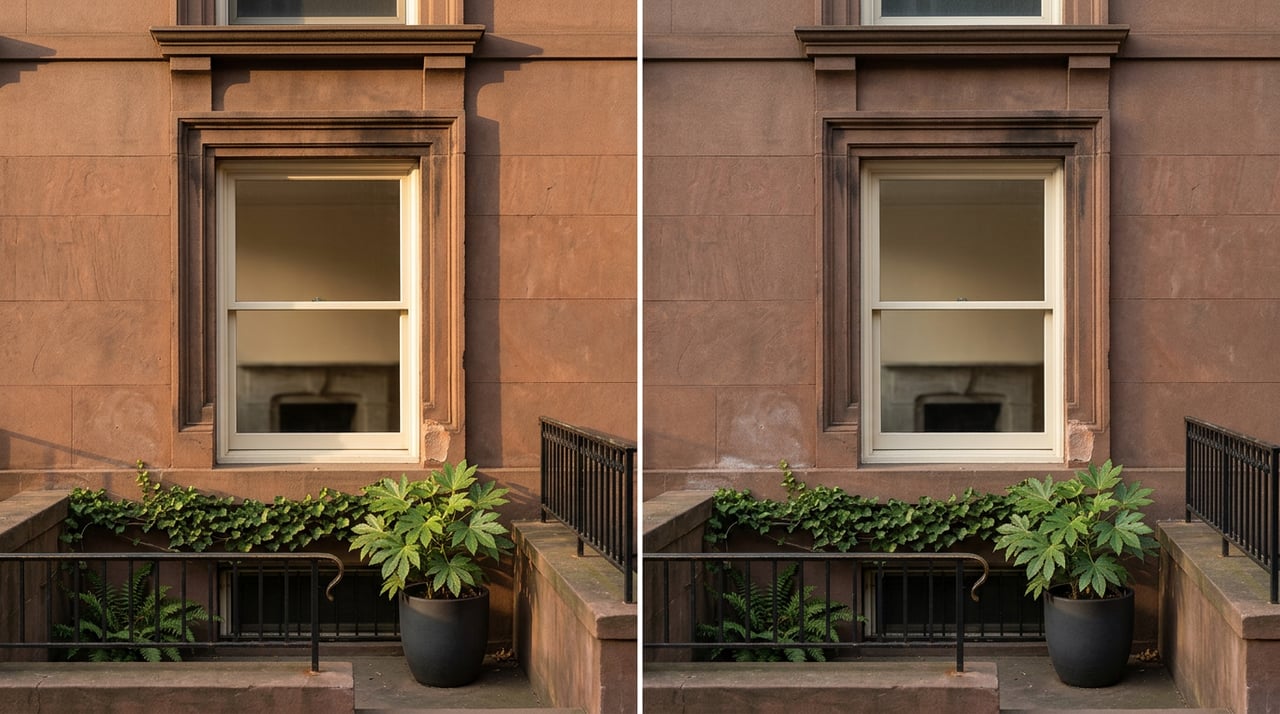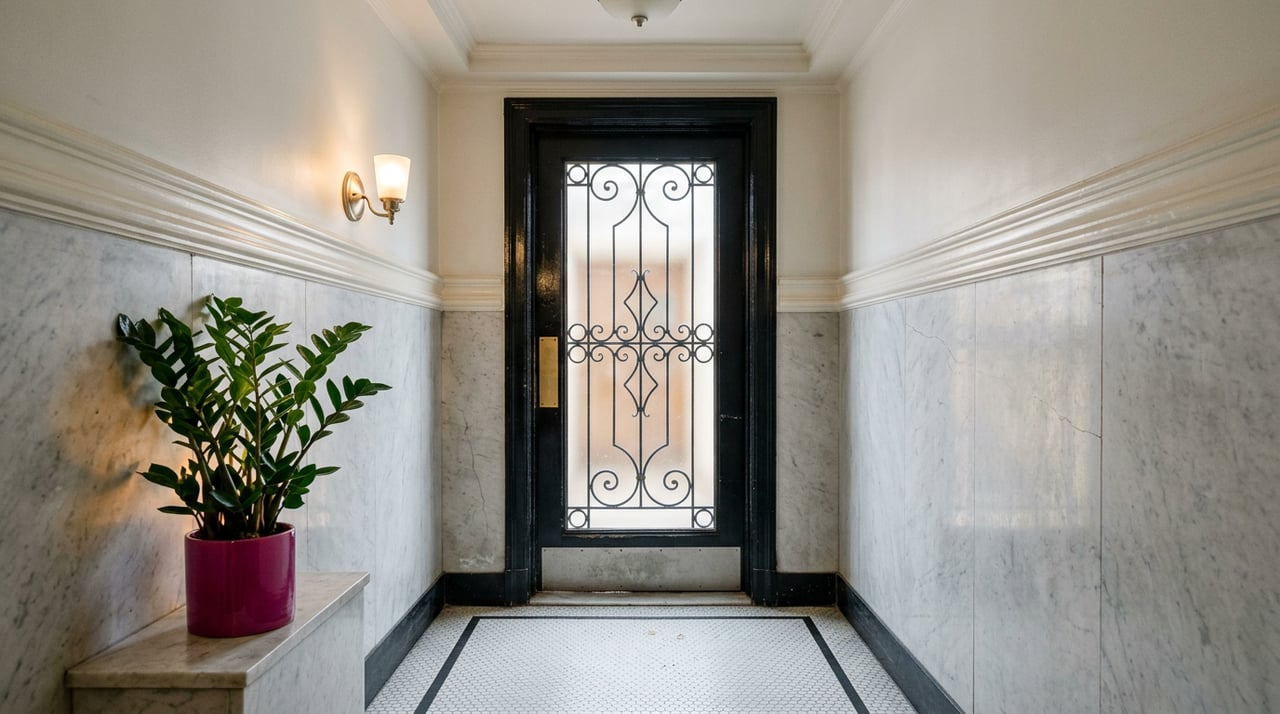
Picture two listings open side by side on a Saturday afternoon. One is a one-bedroom in a glass tower near Paulus Hook, listed at $950,000 with a monthly tax line under $400. The other is a similarly sized unit in a pre-war building in The Heights, listed at $675,000 with taxes closer to $900 a month. On paper, the tower looks like the better deal twice over: lower price per square foot on the tax bill, newer finishes, a doorman. Most buyers stop reading right there.
What that comparison hides is a schedule. The $400 tax line on the tower isn't a fixed cost of owning that unit. It's a temporary rate tied to a construction-era agreement between the developer and the city, one that steps up over time and eventually disappears. The $900 line in The Heights is close to the real, permanent number. In Jersey City in 2026, that distinction is the difference between a predictable monthly payment and one that can jump by hundreds of dollars with almost no warning.
The Discount Has an Expiration Date
Jersey City has leaned on two related but distinct tools to spur development for decades: short-term tax exemptions, which last up to five years and phase in full taxation gradually, and long-term PILOT agreements, which can run anywhere from ten to thirty years under state law. Both let an owner make a payment in lieu of conventional property taxes, often at a fraction of what the improved property would otherwise owe.
The five-year version tends to attach to smaller projects and individual renovations, and according to Jersey City's own 2025 budget, that stock of short-term exemptions represents about $9.6 million in forgone tax revenue annually, with homeowners and condo owners as the primary beneficiaries. The long-term PILOTs are a different animal entirely. Those are the thirty-year deals behind the waterfront towers and the newer high-rises in Journal Square, and they're the ones drawing scrutiny right now.
One example: the Jersey City Municipal Council approved a 30-year tax exemption for a 360-unit tower at 693-701 Newark Avenue in Journal Square, with 90 of those units designated affordable, in exchange for helping secure financing through the New Jersey Housing and Mortgage Finance Agency. That's a full three decades where the building pays a negotiated service charge instead of a conventional tax bill. Buyers looking at a resale unit inside a building like that need to know exactly how many of those thirty years are already gone, because the agreement transfers with the property but the clock doesn't reset.
Why the City Is Suddenly Checking the Math
This isn't an abstract risk. Jersey City is in the middle of an actual fiscal reckoning that makes the abatement question more urgent than it would have been two years ago. Newly elected Mayor James Solomon signed an executive order on January 21, 2026 launching a comprehensive audit of every active long-term tax exemption in the city, more than 100 of them, to check compliance and identify agreements that might warrant enforcement action.
"You've seen expensive luxury developments popping up all over the place, developments that ought to be bringing in money for our city, yet your property taxes and rents continue to rise," Solomon said in announcing the audit. "We're going to audit the big developers who may not be paying what they owe, and we're going to ensure they pay their fair share."
The audit sits inside a larger budget fight. City officials have been working through a structural deficit that councilmembers have put at roughly $255 million, a gap large enough that the state stepped in with a $120 million aid and loan package, reportedly the largest the state has ever extended to a single city. The council initially considered a 15 percent property tax increase, then rejected it on July 29, 2026 after public pushback, though members warned the delay likely just pushes a large lump-sum increase to later in the year. Solomon has pointed to decisions made under his predecessor, Steven Fulop, including an agreement with the KRE Group tied to the Pompidou cultural center project that his administration has been working to renegotiate, as part of what left the city's finances stretched thin.
None of this means every PILOT is a problem. Agreements tied to projects like the Bayfront development, which includes 35 percent affordable housing, or the Embankment Park, were built around specific public benefits the city agreed to accept in exchange for reduced revenue. But the political and financial pressure Jersey City is under right now means more scrutiny on which buildings are living up to their end of these deals, and less patience for extending them. One notable precedent: the Salem Lafayette project had its original abatement agreement extended to nearly 60 years during the Fulop administration, a reminder that these terms aren't always fixed even after they're signed.
The Structural Reason Schools Don't See This Money
Here's the part that rarely makes it into a listing description. Under a conventional property tax bill, the money splits roughly 35 to 40 percent to the city, with the local school district taking the largest single share and the county taking the rest. Under a long-term PILOT, the split is completely different: 95 percent goes to the municipality and 5 percent to the county, and the Board of Education receives nothing directly from that revenue stream at all.
That structure is exactly why abated buildings can look like a bargain to a buyer while looking like a liability to city finance officials. A unit inside a thirty-year PILOT building is, in a real sense, contributing to municipal coffers but not to the school budget the way a fully taxed home does. It's a trade the city made deliberately to attract development to underused parcels, and in many cases it worked. But it also means the "low tax" figure on a new-construction listing was never designed to be permanent, and the current administration's stated goal of directing more PILOT revenue toward schools signals where policy is likely headed next.
What This Actually Buys You, Neighborhood by Neighborhood
The practical effect shows up differently depending on where you're looking:
| Area | Typical price range | Tax situation | What to watch |
|---|---|---|---|
| Downtown / Paulus Hook | $800K to $2M+ | Many towers on active abatements or PILOTs | Ask for remaining term in years, not just current monthly tax |
| The Heights | $500K to $900K | Mostly established housing, full 1.67% rate | Fewer surprises, but no abatement discount either |
| Bergen-Lafayette | $400K to $700K | Mix of full-rate resale and some abated new construction | Confirm which category a specific listing falls into |
| Greenville | $300K to $500K | Standard full tax rate | Most predictable long-term carrying cost in the city |
Downtown Jersey City's own recent numbers illustrate how much turbulence sits inside that abated segment. Over the three months ending May 2026, the median sale price there was $822,000, down 11.9 percent from the same period a year earlier, even as the price per square foot rose 4.0 percent to $900. That kind of divergence, price down while price per square foot climbs, usually points to a shift in what's actually selling rather than a stable trend, which is one more reason to look past the median and ask what a specific building's tax status actually is before comparing it to something in an established neighborhood.
Citywide, the picture is calmer. The median sale price across Jersey City sat at $720,000 over the three months ending May 2026, down a modest 1.4 percent year over year, with homes taking around 56 days to sell on average. That stability citywide is a useful baseline precisely because it's the abated new-construction segment, not the resale market broadly, where the real volatility and the real long-term cost questions are concentrated.
One mortgage advisor who publishes detailed Jersey City tax breakdowns estimates that a monthly payment can jump by roughly $800 when a building's abatement expires, and notes that most buyers simply don't plan for it. That single number, multiplied over a thirty-year hold or even a five-year one, is the entire thesis of this post in miniature.
Questions Worth Asking Before You Write an Offer
Is this a five-year exemption or a long-term PILOT, and how many years are left? These are legally distinct instruments with very different timelines. A five-year exemption phases in full taxation gradually and finishes soon regardless. A long-term PILOT can still have two decades to run.
Does the abatement transfer to a new owner, or does it end at closing? In most cases in Jersey City, these agreements attach to the property and transfer with it until they expire, so the schedule you inherit is the same one the seller has, not a fresh clock.
Has this building's agreement been part of the 2026 audit? With over 100 active abatements under review, a building flagged for compliance issues could see its terms revisited sooner than its original schedule suggested.
Buying in Jersey City right now means underwriting a moving target, not a fixed number. The city's own finances are proof that the PILOT era carries real long-term consequences, and a buyer who asks about years remaining on an abatement before falling for a low monthly tax figure is doing exactly the kind of homework the city itself is now doing on every developer in town.
If you're weighing a new-construction unit against an established resale property in Jersey City and want a clear read on what a specific building's tax schedule actually means for your budget, Lena Simpson can walk through the numbers with you. Request a Personalized Consultation to get started.