"Buyers are often left without any response at all, creating uncertainty, financial strain."
That's how Council Majority Leader Amanda Farías described the co-op board process she and her colleagues spent three years trying to reform. On July 28, 2026, part of that reform finally became law. If you're assembling a board package for a cooperative on the Upper West Side right now, you need to understand exactly which part, because the part that didn't pass is the one that matters most when a board says no.
What Actually Changed on July 28
The Cooperative Application Timeline Law, formally Local Law 2026/058, is the first city law to put hard deadlines on how long a co-op board can sit on your purchase application. It took three years to get here. Public Advocate Jumaane Williams and Council Member Pierina Sanchez introduced the original package of co-op reform bills back in 2023. The timeline piece is the one that survived: the City Council passed it in December 2025, Mayor Eric Adams vetoed it on December 31, and the Council overrode the veto on January 29, 2026, triggering a 180-day countdown to implementation. That countdown lands the law's effective date on July 28, 2026, the date confirmed by the Hudson Gateway Association of Realtors, which also notes the statute only reached the books after the Council voted to override that mayoral veto.
Here is what a co-op board with ten or more units now has to do once your application lands, as detailed by Brick Underground and Gallet Dreyer & Berkey:
- Acknowledge receipt of your package, by email and registered mail, within 15 days
- Tell you specifically what's missing if the package is incomplete
- If no acknowledgment goes out within 15 days, your application is legally deemed complete whether the board has reviewed it or not
- Notify you or your broker of a decision within 45 days of the completed application
- Publish the dates of any summer recess, since board meetings typically pause in July and August and the clock stops during that window
Miss those deadlines and the co-op faces civil penalties enforced by the Department of Housing Preservation and Development. Managing agents carry direct liability too, which matters because the 15-day clock starts the moment the managing agent's office receives your package, not whenever it finally reaches a board member's inbox.
If you're submitting a package this month, that recess clause is not theoretical. Most co-op boards citywide, Upper West Side buildings included, do not meet in July or August, so expect the timeline to pause rather than run straight through.
Why This Lands Harder Here Than Almost Anywhere Else in Manhattan
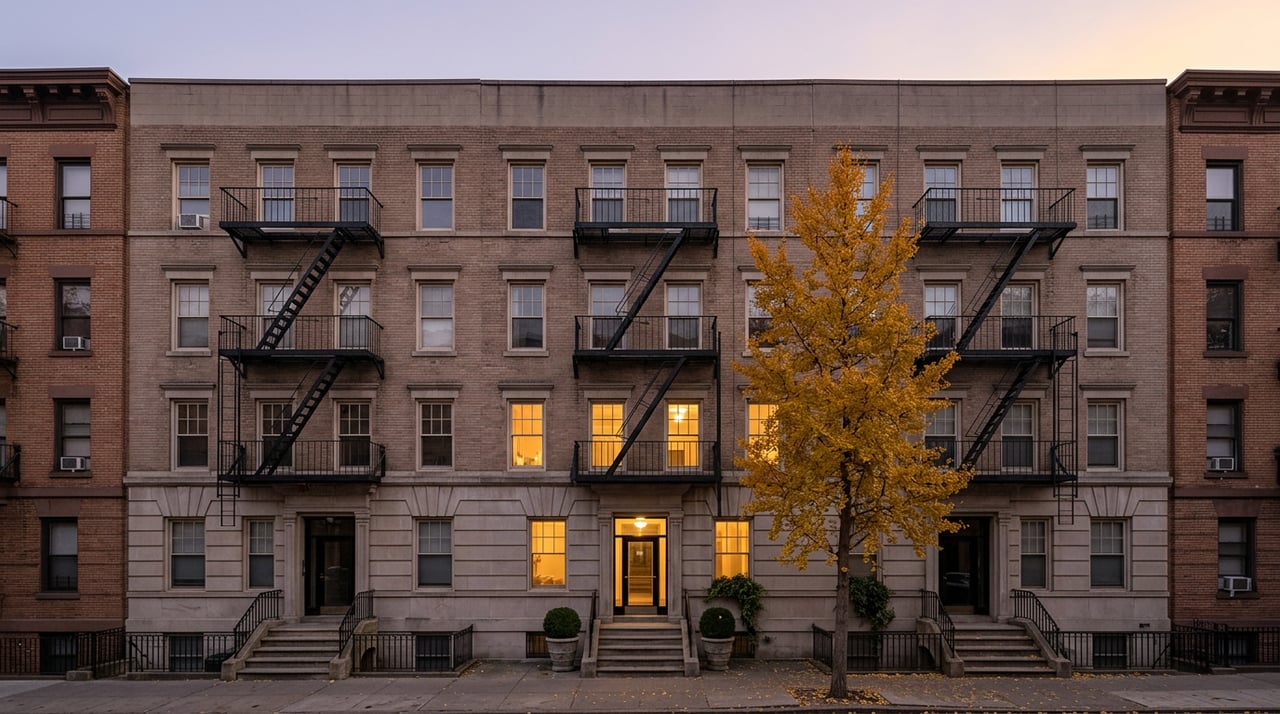
New York City is home to more cooperative apartment buildings than any other municipality in the country, well over 6,800 buildings and roughly 450,000 occupied units, and few neighborhoods concentrate that stock the way the Upper West Side does. Real estate professionals who track building composition here consistently point to the same pattern: Central Park West and the side streets running between Columbus and Amsterdam are dominated by cooperative corporations, with standalone condominiums the exception rather than the norm.
That concentration shows up in the City Council district data too. Council Member Gale Brewer, whose district covers a large stretch of the Upper West Side, represents nearly 28,000 co-op units, one of the largest concentrations of any council district in the city, according to Gothamist's reporting on the bill. When a law changes how co-op boards operate, the Upper West Side absorbs more of that change, for better or worse, than a condo-heavy corridor like Billionaires' Row or the far West Side.
Demand for that co-op stock has also been climbing. The median co-op sale price on the Upper West Side reached $1.4 million as of April 2026, up 22.4 percent year over year, according to PropertyShark's neighborhood tracking. The neighborhood also captured the largest share of Manhattan's $4 million-plus signed contracts in a single week that April, per the Olshan Luxury Market Report cited by Hoodline. More buyers competing for co-op inventory means more board packages moving through the pipeline, and more people who will eventually sit across from a board that can now move faster but still doesn't have to explain itself.
The Bill That Didn't Make the Cut
The timeline law was one of three co-op reform bills the Council considered together. The other two stalled. One would have required boards to disclose their financial thresholds and certain records to prospective buyers before an application was even filed. The other, generally referred to as the "reasons" bill, would have required a board to provide a written explanation within five days of rejecting an applicant, detailed enough that the applicant could understand and potentially correct the deficiency.
Neither passed. According to Habitat Magazine's coverage of the Council's final consideration of the package, the reasons bill was vigorously opposed by co-op boards and did not come to a vote alongside the timeline measure. Advocates have kept pushing. The Fair Housing Justice Center is currently backing a renewed version, arguing that a board's reliance on vague standards like character or fit leaves no paper trail to check for bias. Civil rights attorney Craig Gurian, who has spoken for the coalition backing disclosure, put it plainly to Gothamist: rejecting an applicant without any explanation is not the exception at a handful of buildings, it is "industry policy."
That absence of a paper trail is not just a fairness question. It is also a data problem. The city's Commission on Human Rights told Gothamist that of roughly 500 housing discrimination complaints filed over the past five years, fewer than 10 involved co-ops. That is not evidence co-op discrimination is rare. It is evidence that without a reason on record, there is almost nothing for a rejected applicant to point to.
For comparison, Westchester County has already gone further. Its own co-op disclosure law requires boards to use a county-provided rejection letter listing specific reasons and to notify the county Human Rights Commission of the denial, per the HGAR summary. A co-op board thirty minutes north of the Upper West Side owes a rejected buyer more paperwork than one on Riverside Drive does today.
What Changed, and What Didn't
| Before July 28, 2026 | After July 28, 2026 | |
|---|---|---|
| Acknowledging your application | No required timeframe | 15 days, by email and registered mail |
| Decision on a complete application | No required timeframe | 45 days |
| What happens if the board goes silent | Application can sit indefinitely | Deemed complete; missed deadlines expose the co-op to HPD penalties |
| Reason for a rejection | Not required | Still not required |
| Financial thresholds and building records | Not required to disclose in advance | Still not required in advance |
What This Means If You're Under Contract This Fall
Speed and transparency are not the same thing, and the gap between them is where a buyer can still get caught off guard. A few things worth building into your plan:
Get your package airtight before you submit it. Since the 15-day acknowledgment clock now runs from the moment the managing agent's office receives your materials, and an incomplete package restarts nothing in your favor, a clean submission the first time is worth more than it used to be.
Ask about summer recess dates up front. Boards are now required to publish them, and a package submitted in early August may sit longer than the headline 45-day figure suggests once the recess period is excluded.
Do not mistake a fast decision for a fair one. A board can now move through your application in exactly 45 days and still decline you with nothing more than a form letter. The law gives you a timeline. It does not give you a why.
Lean on someone who knows the building, not just the neighborhood. Because boards still have no obligation to state their reasoning, the practical way to gauge your odds before you apply is often institutional memory: how a specific building's board has treated similar financial profiles, renovation requests, or ownership structures in the past. That kind of pattern recognition still comes from relationships and transaction history, not from the statute.
Frequently Asked Questions
Does this law apply to condominiums on the Upper West Side? No. The Cooperative Application Timeline Law is specific to cooperative corporations. Condo boards typically have shorter, waiver-based review windows already built into their offering plans, which is one more reason the practical impact of this law concentrates in co-op-heavy pockets of the neighborhood.
If a board misses the 45-day deadline, is my application automatically approved? No. Missing the deadline exposes the co-op and its managing agent to civil penalties pursued by the Department of Housing Preservation and Development. It does not convert a missed decision into an approval.
Can a board still reject me without telling me why? Yes. The law that took effect July 28, 2026 governs timing, not disclosure. A board can meet every deadline in the new statute and still decline your application with no written explanation at all.
If you're weighing a co-op purchase on the Upper West Side and want a clear read on how a specific building's board tends to operate before you put down a deposit, Lena Simpson has spent more than two decades building exactly that kind of institutional knowledge across Manhattan's co-op stock. Request a Personalized Consultation to talk through your building shortlist, your board package, and a realistic timeline before you're the one waiting on a decision.